

The Football Video Support (FVS) review system is reshaping decision-making at the 2026 FIFA U-17 Women’s World Cup in Morocco, offering a practical, coach-driven alternative to full Video Assistant Referee (VAR) technology.
Deployed across the tournament running from mid-October to early November, FVS allows each team two challenges per match for clear and obvious errors involving goals, penalty decisions, direct red cards, or cases of mistaken identity.
Coaches signal by spinning a finger and handing a special “Team Video Support” card to the fourth official; the referee then reviews broadcast footage on a pitchside monitor. Unlike traditional VAR, there is no dedicated video official constantly monitoring play—only a replay operator supports the on-field referee.
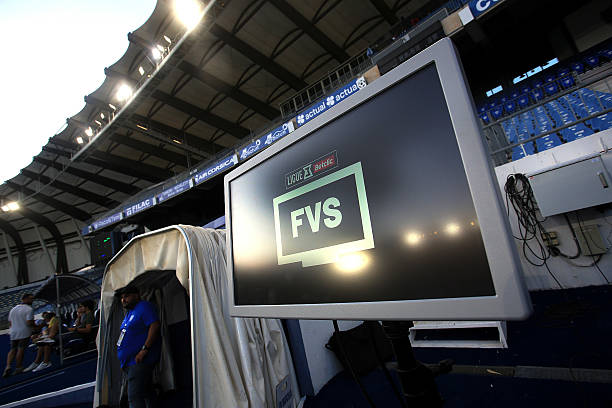
FIFA introduced FVS specifically for competitions with limited resources and fewer cameras, emphasizing it is not a “cheaper VAR” but a targeted support tool. Pierluigi Collina, chair of FIFA’s refereeing committee, has stressed that FVS empowers coaches while assisting officials without the full infrastructure of elite men’s or senior women’s tournaments.
Trials in earlier youth events and domestic leagues (such as Spain’s Liga F) showed positive reception, with coaches retaining successful challenges and data indicating relatively low rates of overturned decisions.
The system has already featured in multiple matches. In the USA’s 3-2 group-stage loss to China PR, an early American goal by Amari Manning was correctly ruled offside after Video Support confirmation. Polish coaches used the challenge card during their group and knockout games, drawing attention as the “revolution” reached youth World Cup stages.
Most notably, FVS played a role in the Round of 16 clash between Nigeria and Mexico on 29 October 2026 at the Mohammed VI Football Complex in Salé. Nigeria advanced 2-1 thanks to goals from Oluebube Umejiaku (40’) and Mary Dunstan (around the 71st-72nd minute), with Mexico’s Emily Delgado scoring a late consolation.

Reports from the match indicated at least one key incident—linked to a Nigerian goal—was subject to review, with the on-field decision upheld after pitchside examination, underscoring how FVS can settle high-stakes moments without full VAR delays.
Arguments in favor center on accessibility, fairness, and empowerment. FVS brings video technology to youth and women’s competitions that cannot sustain full VAR costs or multi-camera setups. It gives coaches direct agency—similar to challenges in tennis or cricket—encouraging strategic use and reducing frustration over unaddressed errors.
Supporters, including coaches in trial leagues, praise the tool for giving referees a second look with more time, improving accuracy on critical calls while preserving the flow of the game better than constant interventions. FIFA data and post-tournament surveys from earlier FVS uses have been largely positive, positioning it as a scalable solution that levels the playing field globally.
Critics argue FVS is incomplete and potentially disruptive. Because reviews depend entirely on a coach’s challenge, some clear errors may go unexamined if a team has already used its two opportunities or chooses not to challenge. Limited camera angles in youth tournaments can produce inconclusive footage, leaving the original decision in place by default.
There are concerns about match interruptions, the pressure placed on young coaches to make split-second strategic calls, and the perception that it remains a second-tier system compared with full VAR. Some observers worry it could create inconsistency across competitions or lead to gamesmanship in how challenges are timed and used.
As the knockout stages continue in Morocco, FVS remains a defining feature of this edition of the FIFA U-17 Women’s World Cup.
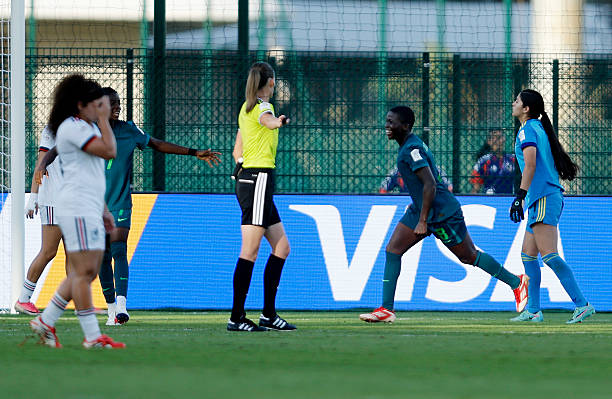
The Nigeria-Mexico encounter illustrated both its practical value in clarifying decisive moments and the ongoing debate about the right balance between technology, coach involvement, and the natural rhythm of the game. Whether FVS expands further into other FIFA and domestic competitions will depend on continued analysis of its impact on fairness, match flow, and referee support at the highest levels of youth women’s football.
88.9 FM
SPORTS WRAP with Breezy, Victor Okhani and Femi
Comments
0Be the first to comment on this article.